

Apple's India Ascendancy Reshapes Global Tech Manufacturing Landscape Amid Geopolitical Shifts
This strategic pivot propels India's smartphone exports to record highs, driven by Apple's substantial iPhone contributions, while fundamentally altering global supply chain dynamics and mitigating tariff impacts for the tech giant.
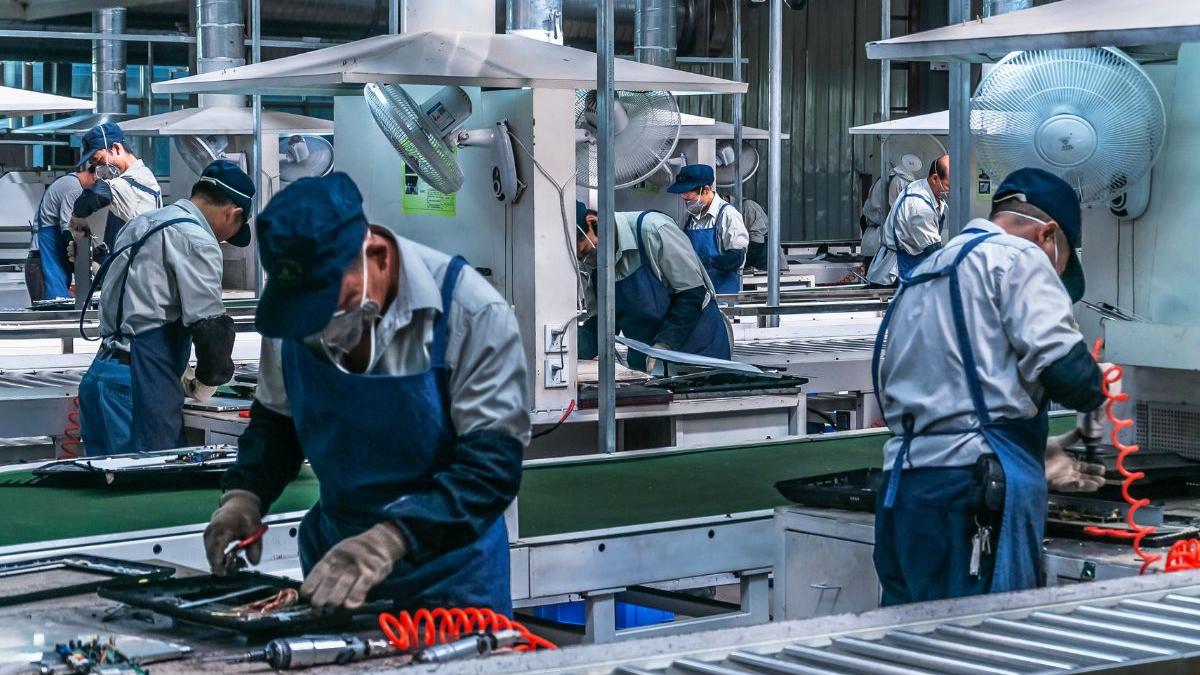
Apple Inc. has cemented India's position as a pivotal global manufacturing hub, with iPhones destined for the U.S. market now predominantly produced within the subcontinent. This strategic pivot propelled India's smartphone exports to a record $7.72 billion in Q1FY26, showcasing an impressive 58% year-on-year surge from $4.9 billion in Q1FY25, primarily driven by Apple's substantial contributions, which accounted for almost 78% of all smartphone exports during the quarter.
The monumental shift reflects a calculated decoupling from traditional manufacturing dependencies, particularly China, influenced by escalating geopolitical tensions and a push for supply chain resilience, often referred to as the "China Plus One" strategy. India's robust Production-Linked Incentive (PLI) scheme has been instrumental, fostering an environment where smartphone exports skyrocketed from $3.1 billion in FY21 to $24.1 billion by FY25, attracting tech giants to invest heavily in local production capabilities.
This reorientation extends beyond mere production figures; it underscores India's burgeoning role in the global electronics ecosystem. With smartphones now comprising 62% of India's total electronics exports, which reached $12.4 billion in Q1FY26, the nation is rapidly transforming into a formidable alternative to established manufacturing centers, drawing parallels to industrial shifts witnessed over the past two decades in Southeast Asia.
Apple CEO Tim Cook confirmed that, for the April–June 2025 quarter, the majority of iPhones sold in the U.S. would be manufactured in India, while China would continue to be where most Apple products are made for sale outside the U.S. This move, even amidst criticism from figures like former US President Donald Trump regarding manufacturing locations, mitigates future tariff vulnerabilities, which cost Apple $800 million in the June quarter and are projected to impact an additional $1.1 billion in the September quarter.
Beyond exports, Apple is simultaneously witnessing record revenue growth within the Indian domestic market, fueled by strong iPhone sales, prompting plans for significant retail expansion. This dual focus—manufacturing for export and catering to a burgeoning local consumer base—positions India not just as a production base but as a critical, self-sustaining pillar in Apple's global strategy, potentially influencing future technology investment patterns across Asia.
India's trajectory as a global electronics manufacturing powerhouse, spearheaded by Apple's strategic investments, signifies a profound recalibration of global supply chains. This shift not only bolsters India's economic resilience but also sets a precedent for how major technology companies might navigate an increasingly fragmented and risk-averse international economic landscape, ensuring diversified production hubs are the norm.