

Market Coupling Reshapes India's Power Trading Landscape: IEX Navigates Strategic Shift
This regulatory evolution centralizes bid matching, challenging the Indian Energy Exchange's long-held market dominance by shifting the competitive landscape and compelling a strategic pivot towards diversified value-added services beyond traditional spot trading.
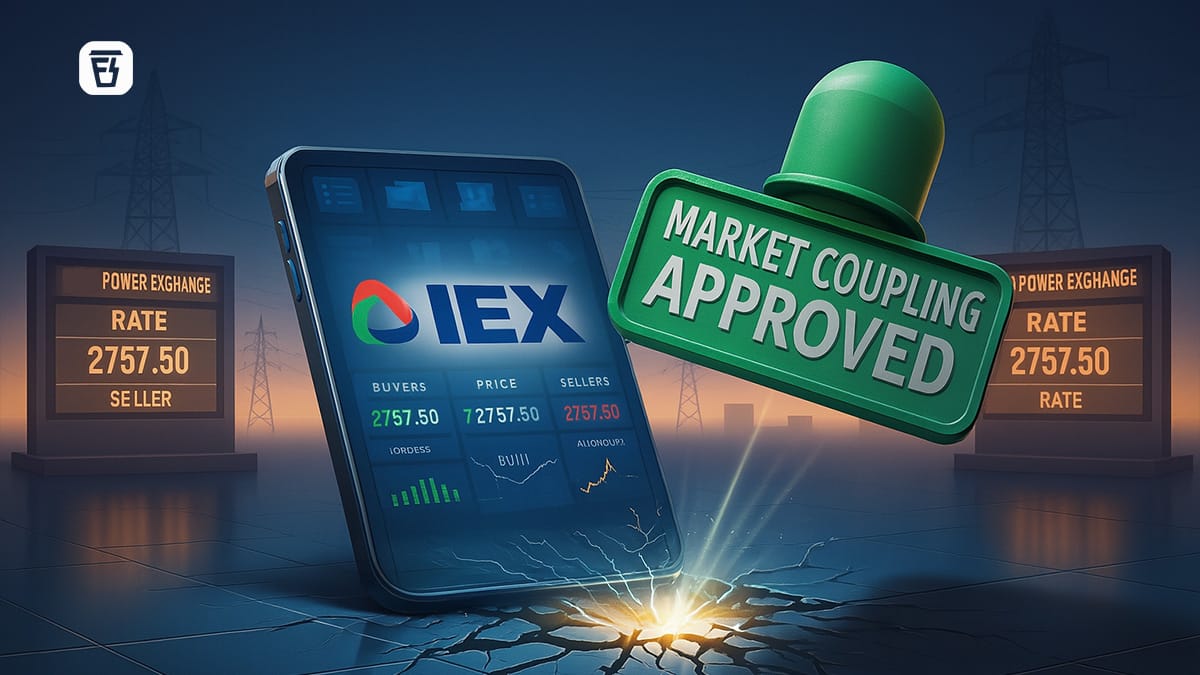
Regulators' recent approval of market coupling for electricity trading is poised to fundamentally alter the competitive dynamics within India's energy market, presenting a pivotal challenge for the Indian Energy Exchange (IEX), a long-standing dominant player.
The mechanism, which consolidates buy and sell orders across all licensed power exchanges into a single algorithm for optimal matching, aims to foster a more integrated and efficient national electricity market. This systemic overhaul is designed to enhance price discovery, optimize resource allocation, and strengthen grid stability by aligning trading outcomes directly with physical grid constraints, a practice observed in mature energy markets globally, such as the unified bidding zones within the European Power Exchange (EPEX SPOT) or the intricate nodal pricing systems in North America's PJM Interconnection.
India's journey towards a liberalized power market, initiated decades ago with the unbundling of state electricity boards, has progressively moved from bilateral power purchase agreements towards exchange-based spot trading. IEX, launched in 2008, swiftly emerged as the de facto primary platform, leveraging its early mover advantage and building substantial liquidity that, in turn, attracted more participants, cementing its market leadership in segments like the Day-Ahead Market (DAM). Its robust technological infrastructure and expansive participant network have been key pillars of its success, facilitating transparent price signals for millions of units of electricity daily and contributing to the overall market's maturity.
While market coupling promises broader systemic benefits, it inherently diminishes IEX’s unique advantage derived from its dominant liquidity pool, which previously allowed it significant influence over price discovery. This paradigm shift necessitates a strategic pivot for IEX, moving beyond its traditional transactional focus. However, the company's recent Q1 FY26 financial results, showcasing a 25% surge in consolidated net profit and robust growth in electricity volumes (up 14.9% year-on-year to 32.4 billion units), alongside impressive performances in its wholly-owned International Carbon Exchange (ICX) and Indian Gas Exchange (IGX), underscore its existing operational resilience and diversification efforts. Analysts suggest this demonstrates a foundational strength beyond the immediate impact of regulatory changes.
Industry analysts further predict that IEX's future trajectory will hinge on its ability to innovate and expand its offerings beyond core spot trading. This could involve deepening its engagement in newer segments like the Real-Time Market (RTM), scaling up green energy certificates (I-RECs) as India pushes its renewable energy agenda, and developing advanced risk management tools, sophisticated data analytics platforms for market participants, and potentially even cross-border energy trading mechanisms as regional grid interconnections strengthen. The country's escalating electricity demand, projected to grow significantly over the next decade with ambitious renewable energy targets and rapid industrialization, presents an expansive canvas for new value-added services that can leverage IEX's established market position and technological prowess.
The implementation of market coupling represents a crucial evolutionary step for India's power sector, pushing all market participants, including IEX, towards greater innovation and efficiency in a dynamically evolving energy landscape. The transition will demand strategic agility and a re-evaluation of core business models, but it also opens avenues for enhancing market depth and stability for the benefit of producers, distributors, and ultimately, millions of consumers across the nation.