

Christopher Nolan's Enduring Cinematic Legacy: A Birthday Tribute to Innovation and Impact
His work, exemplified by 'The Dark Knight' and 'Oppenheimer,' not only redefines genre conventions but champions practical effects and complex narratives, profoundly influencing global filmmaking trends and inspiring new artistic pathways.
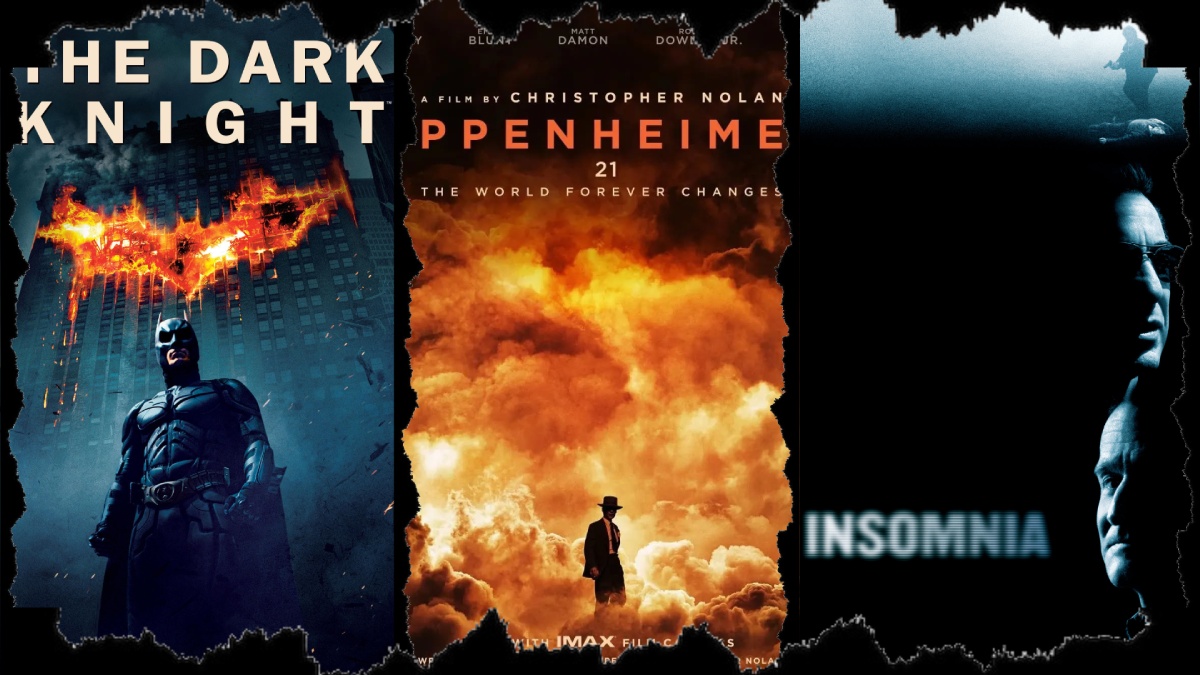
As acclaimed director Christopher Nolan observes his birthday on July 30th, the occasion underscores his unparalleled influence on contemporary cinema, a career characterized by audacious narrative structures and a steadfast commitment to practical filmmaking that has reshaped the blockbuster landscape.
Nolan's distinctive authorial voice has consistently pushed the boundaries of mainstream filmmaking, evident in a filmography that seamlessly blends intricate plots with immersive visual experiences. His work, ranging from the psychological complexity of 2000's *Memento*, which redefined non-linear storytelling, to the historical gravitas of 2023's *Oppenheimer*, a profound exploration of scientific ethics, showcases a rare versatility. Films such as *The Dark Knight* (2008) transcended the superhero genre by imbuing it with a grounded, gritty realism and profound thematic depth, while *Dunkirk* (2017) reinvented the war film through its multi-perspective, time-bending approach, engrossing audiences in its harrowing tension without relying on conventional exposition.
A hallmark of Nolan's methodology is his fervent dedication to practical effects, often eschewing extensive computer-generated imagery in favor of tangible, in-camera spectacle. This philosophy, famously showcased in the rotating corridor sequence in *Inception* (2010) or the gargantuan cornfields of *Interstellar* (2014), injects a visceral authenticity into his large-scale productions. Coupled with his innovative sound design, which elevates emotional resonance and dramatic tension—as distinctively heard in *Tenet* (2020) and *The Dark Knight*—Nolan’s films offer a sensory immersion that defies typical Hollywood conventions, compelling audiences worldwide to engage with cinematic art on a deeper level.
Beyond his technical prowess, Nolan holds a unique appreciation for diverse global cinematic traditions, particularly acknowledging a profound affinity for Indian cinema. Having filmed segments of *The Dark Knight Rises* (2012) and *Tenet* (2020) in India, he has expressed admiration for Bollywood's raw, emotional, and sensory power, describing its use of sight, sound, and music as "subprimal movements" that Hollywood has, in his view, sometimes lost. His engagement with Indian talent, including discussions with Anil Kapoor for a role in *Inception* and interactions with industry stalwarts like Amitabh Bachchan and Shah Rukh Khan, highlights his global perspective and a desire to integrate such primal elements into his own storytelling, bridging cultural cinematic divides.
Film scholars and industry analysts often cite Nolan as a pivotal figure who proved that intellectual ambition and commercial success are not mutually exclusive in blockbuster filmmaking. Dr. Evelyn Reed, a prominent film theorist at the British Film Institute, recently noted, "Nolan's ability to consistently deliver intellectually stimulating narratives within a commercially viable framework has undoubtedly inspired a generation of filmmakers to aim higher, demonstrating that audiences crave complexity and originality, not just spectacle." His ongoing influence is projected to foster a new era where narrative depth and tangible cinematic artistry continue to drive critical and popular success, challenging the prevailing reliance on digital artistry.
As Christopher Nolan continues to redefine cinematic possibilities, his birthday serves as a testament to an artist whose vision has irrevocably altered the landscape of global storytelling, leaving an indelible mark on how large-scale productions are conceived and experienced, ensuring his legacy will inspire for decades to come.