
Digital Discrepancies Cloud Bihar Elections: Tejashwi Yadav's Voter ID Challenge Raises Alarm
The controversy surrounding Tejashwi Yadav's missing name in Bihar's draft voter list, amidst the deletion of over 65 lakh electors, underscores pressing questions regarding electoral transparency and the robustness of India's democratic infrastructure ahead of crucial polls.
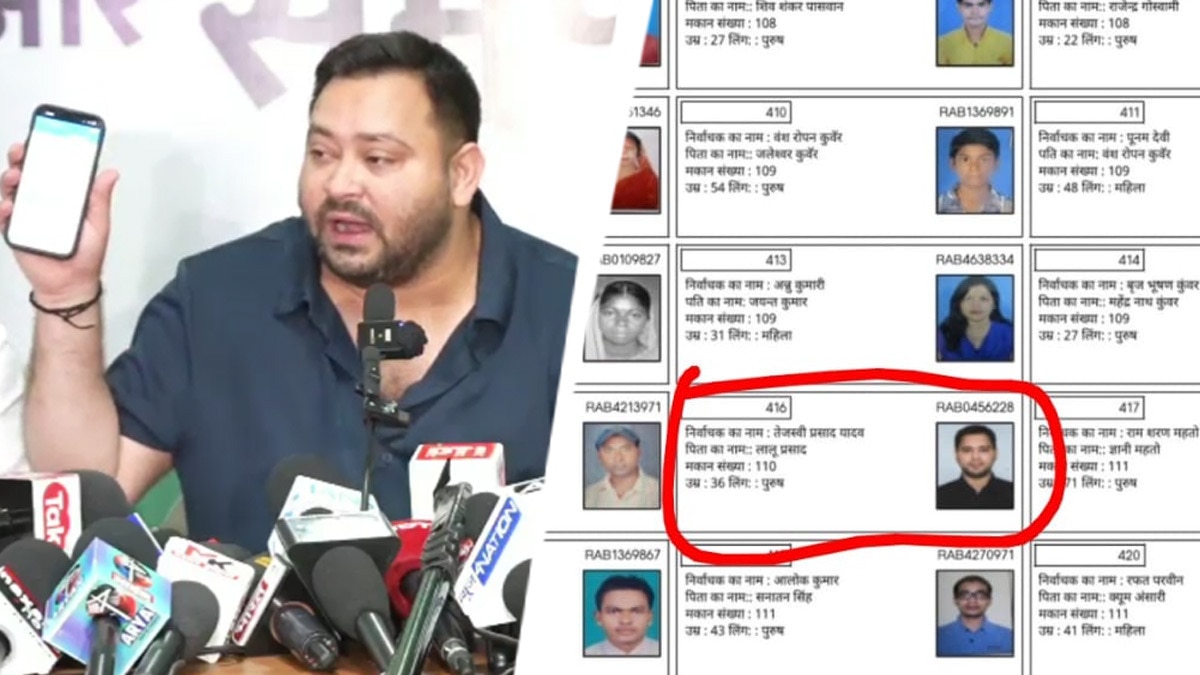
RJD leader Tejashwi Yadav's claim that his name was absent from Bihar's revised draft voters' list has ignited a fresh controversy, exposing potential vulnerabilities in the electoral process just ahead of critical polls. While the Election Commission of India (ECI) swiftly refuted Yadav's allegations, presenting conflicting electoral details, the incident underscores deeper concerns about voter roll accuracy and public trust.
The dispute intensified when Yadav displayed an EPIC number that, when checked on the poll body's app, yielded "no records found," directly contrasting the ECI's release of an alternative EPIC number and confirmation of his registration at a Patna polling station. This discrepancy highlights the complexity and potential for confusion within large-scale digital voter management systems, particularly given the sheer volume of data involved with 7.24 crore electors in Bihar.
The controversy gains sharper context from the Special Intensive Revision (SIR) in Bihar, a process that saw over 65 lakh voters dropped from the rolls. Such significant deletions, even if administrative, invariably fuel accusations of bias and political targeting. Yadav raised concerns about the large-scale deletions, questioning how he would contest elections if his name was missing and alleging the Election Commission had "cleverly not given the address of any voter, no booth number, and no EPIC number" in the provided lists, making it difficult to ascertain whose names were removed. This echoes broader national discussions on electoral integrity, reminiscent of the ECI's prior directive asking officials to disregard similar "vote theft" remarks by prominent political figures, indicating a recurring challenge in maintaining perceived impartiality.
Ensuring the unimpeachable accuracy of voter rolls is paramount for democratic health. The current situation in Bihar necessitates enhanced transparency from the Election Commission, perhaps through easily verifiable, public-facing digital dashboards that allow citizens to confirm their registration status with absolute certainty. Beyond individual complaints, a comprehensive, independent audit of the SIR process could serve to restore confidence and preempt future allegations of disenfranchisement.
As Bihar prepares for its electoral exercise, the spotlight on voter list integrity serves as a crucial reminder of the foundational importance of a trustworthy electoral system. The resolution of such discrepancies, coupled with robust, accessible verification mechanisms, will be critical in upholding the democratic principles that underpin India's vast electoral landscape.