

Dropped Headload Tragedy Spurs Sweeping Safety Overhaul at India's Busiest Stations
The New Delhi stampede, triggered by dropped luggage on a foot overbridge, highlighted critical vulnerabilities in crowd management and infrastructure, prompting Indian Railways to implement sweeping safety reforms including wider bridges, access control, and advanced surveillance at 73 high-traffic stations.
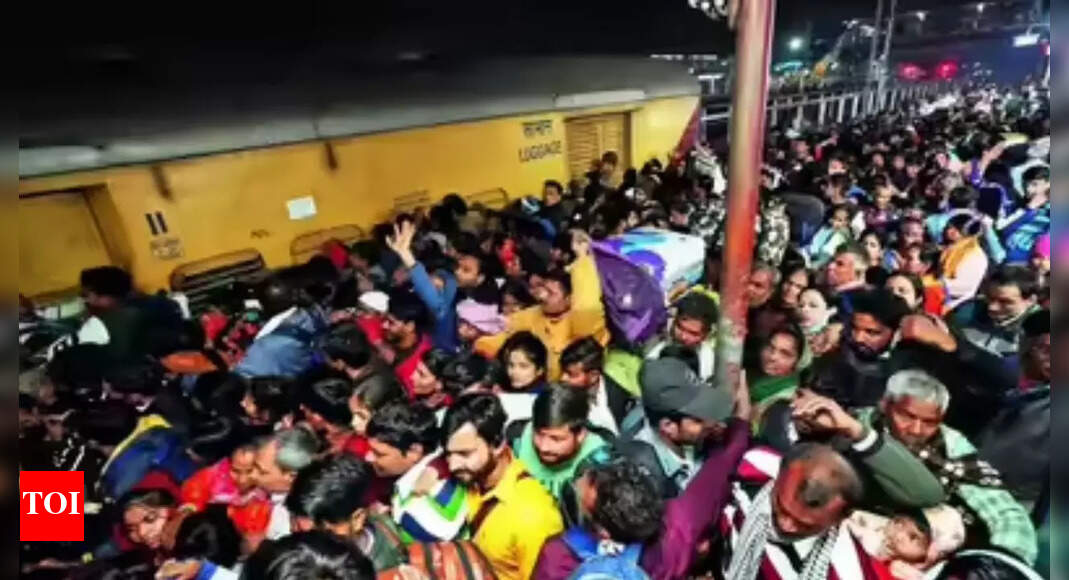
A passenger's dropped luggage on a New Delhi Railway Station foot overbridge triggered a fatal chain reaction on February 15, 2025, resulting in 18 deaths and 15 injuries, prompting Indian Railways to initiate a comprehensive national safety reform across its high-traffic network.
The tragic incident unfolded around 8:48 PM during the evening rush hour when thousands converged at the station for Bihar-bound trains, including those for the Maha Kumbh festival in Prayagraj. A seemingly minor misstep—a dropped headload—created a catastrophic domino effect on the already strained Foot Over Bridge (FOB)-3 connecting platforms 14 and 15, leading to a crowd crush that claimed four children and eleven women among the 18 fatalities. This event underscored the critical need for immediate intervention in managing dense pedestrian traffic within India's vast railway system.
A subsequent high-level inquiry identified the falling luggage as the primary catalyst, severely compounded by extreme passenger density and the prevalence of large headloads, which collectively hindered smooth movement on the narrow thoroughfare. The committee's findings highlighted that while existing crowd management protocols were theoretically in place, the sheer volume of passengers had pushed the infrastructure beyond its safe operating limits, revealing a systemic vulnerability in an otherwise resilient transport network.
In response, Railway Minister Ashwini Vaishnaw confirmed that Indian Railways paid a total of ₹2.01 crore in compensation to 33 victims and their family members, with ₹10 lakh for each deceased, ₹2.5 lakh for the grievously injured, and ₹1 lakh for those with simple injuries. The minister also announced an ambitious set of corrective measures. Indian Railways is now implementing a nationwide program targeting 73 stations historically prone to heavy passenger surges. This initiative includes establishing permanent holding areas outside station premises at 60 identified stations, enforcing stringent access control mechanisms where only confirmed ticket holders can access platforms, and crucially, replacing existing narrow foot overbridges with significantly wider structures (12-meter and 6-meter designs) to facilitate safer and more efficient pedestrian flow.
Beyond infrastructural upgrades, the preventative strategy incorporates advanced technological solutions. Enhanced surveillance systems with extensive camera installation and modern digital communication equipment will be deployed to monitor and manage crowd movements more effectively. Furthermore, senior railway officers, designated as Station Directors, will be vested with greater financial powers on-site at all 73 key stations, enabling quicker decision-making and resource deployment during peak hours or unforeseen exigencies, and will oversee all station-level departments for unified action. This multi-faceted approach signifies a pivotal shift towards proactive, data-driven crowd management, aiming to mitigate human error and infrastructural limitations that have historically posed challenges in one of the world's most densely trafficked railway networks.
The incident at New Delhi serves as a stark reminder of the complex interplay between human behavior, infrastructural capacity, and emergency preparedness in high-density public spaces. The announced reforms represent a critical step in modernizing India's railway infrastructure, moving beyond reactive responses to cultivate a more resilient and secure travel environment for the millions who rely on it daily.