

German Rail Tragedy Near Riedlingen Claims Lives, Accelerates Infrastructure Debate
The incident highlights critical infrastructure challenges and intensifies calls for accelerated investment in Germany's extensive rail network amidst increasing climate pressures.
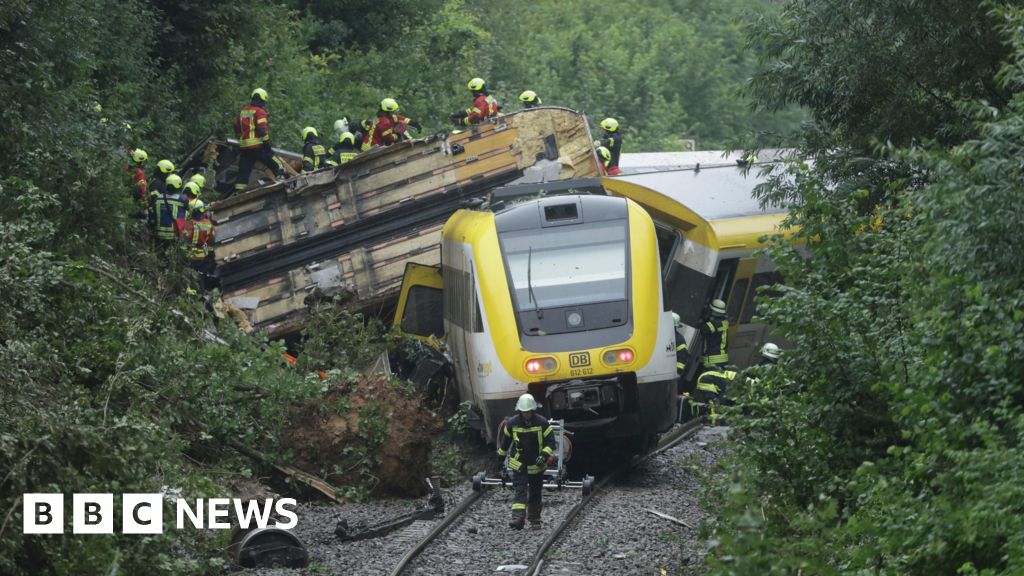
A regional passenger train derailed in southern Germany's Baden-Württemberg state Friday, resulting in at least three fatalities and numerous injuries as emergency services responded to the scene.
The incident, occurring near Riedlingen in the Biberach district, involved a train carrying approximately 100 passengers on its route from Sigmaringen to Ulm. Initial assessments suggest that the accident may be linked to a landslide, triggered by torrential rainfall and severe storms that have impacted the region. Emergency crews faced challenging conditions in the densely forested area as they worked to free trapped individuals and assess the extent of damage to the carriages, which sustained heavy impact.
This tragic event casts a renewed spotlight on the critical state of Germany's extensive 33,000-kilometer rail network. While renowned for its efficiency, significant sections of the infrastructure, much of which dates back to the post-war reconstruction era, have faced decades of underinvestment. Experts like Dr. Klaus Schmidt, a civil engineering professor specializing in railway systems at the Technical University of Munich, have long warned about the accumulating maintenance backlog. "The sheer volume of aged track, bridges, and signaling systems necessitates a sustained, multi-billion euro commitment," Schmidt stated, emphasizing that climate change is introducing new variables, such as increased frequency of extreme weather events, which further stress these older systems.
Deutsche Bahn, Germany's national rail operator, has been embarking on an ambitious "Strong Rail" strategy aimed at modernizing its network. The federal government has pledged substantial investment, with commitments reaching into the tens of billions of euros over the next decade to upgrade lines, enhance digital signaling, and improve overall resilience. However, the pace and scope of these projects are now under intense scrutiny, particularly in light of this week's tragedy. The Chancellor, Friedrich Merz, extended his deepest condolences to the victims' families, underscoring the government's full support for the ongoing investigation and emergency efforts.
The derailment underscores the urgent need for accelerated preventative measures, including advanced geological monitoring systems along vulnerable corridors and proactive slope stabilization. This incident will likely galvanize political will to fast-track infrastructure spending and reinforce safety protocols, potentially leading to a re-evaluation of current timelines for modernization projects. For the millions who rely on Germany's robust public transport network, ensuring absolute safety remains paramount.
Investigations into the precise cause of the derailment are ongoing, with authorities meticulously examining all contributing factors. The outcome will be crucial in shaping future strategies for rail safety and infrastructure development across Germany, reinforcing the nation's commitment to a secure and reliable transportation backbone.