

Himachal Pradesh Grapples with Escalating Monsoon Fury: Landslides and Infrastructure Collapse
The state battles widespread infrastructure damage, with numerous roads, power lines, and water supplies affected, alongside a significant human toll from escalating cloudbursts, flash floods, and landslides, prompting a critical review of regional disaster preparedness.
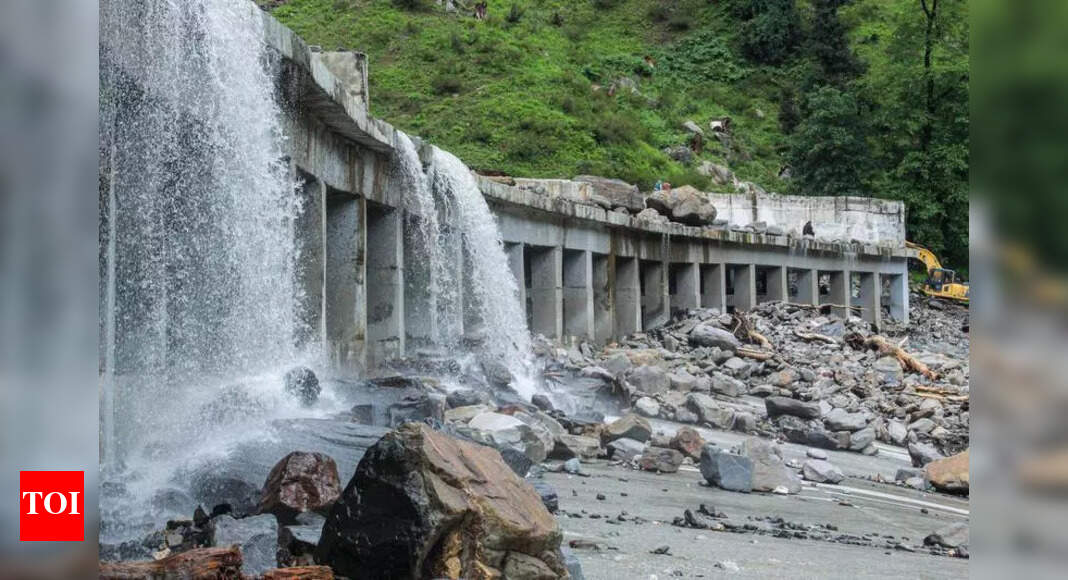
A significant landslide struck Duridhar village in Himachal Pradesh’s Kullu district, necessitating the immediate evacuation of twenty residents to a designated transit camp, as the state contends with an intensified monsoon season.
The recent geological event in Duridhar, situated within the vulnerable Sainj Valley, has blocked critical arteries including National Highway 70 (Mandi-Kotali road) and National Highway 305 (Luhri-Nither road), severely disrupting connectivity for local populations and regional trade routes. This incident underscores the precarious conditions faced by communities in the Himalayan foothills during peak monsoon periods.
Across Himachal Pradesh, the cumulative impact of persistent heavy rainfall has been extensive. Reports indicate that over 210 roads, alongside dozens of power distribution transformers and more than a hundred water supply schemes, have been rendered non-operational. Since June 20, 2025, the state has recorded a concerning frequency of natural calamities, with 25 cloudbursts, 42 flash floods, and 32 landslides contributing to a tragic toll of 82 fatalities and 34 individuals currently reported missing as of July 26.
Himachal Pradesh, renowned for its challenging mountainous terrain and intricate river systems, has historically been susceptible to the destructive power of the annual monsoon. However, climate science indicates a discernible shift towards more extreme and localized weather events. Experts at the Indian Institute of Technology (IIT) Mandi, specializing in hydro-geological hazards, have highlighted an increasing trend in cloudburst incidents and flash floods, which amplify the risk of landslides in geologically unstable zones, directly impacting agricultural cycles and the vital hydropower sector.
Dr. Anya Sharma, a lead climatologist at the National Institute of Disaster Management (NIDM), noted, "The current pattern of intense, short-duration rainfall episodes is particularly perilous for the fragile Himalayan ecosystem. It strains existing infrastructure and necessitates a paradigm shift in urban planning and rural development strategies, especially for sectors like tourism, which is a backbone of the state’s economy." The disruption to transportation networks, for instance, directly affects the movement of cash crops like apples from Kinnaur and Kullu, and hampers tourist influx to popular destinations in Kangra and Chamba.
In response to the escalating crisis, the Himachal Pradesh Disaster Management Authority (HPDMA) is working to restore essential services and enhance its early warning systems. The Indian Meteorological Department (IMD) has further amplified concerns by issuing an orange alert for Chamba, Kangra, Mandi, and Kullu districts, anticipating heavy to very heavy rainfall on July 29, urging residents and authorities to remain vigilant. Proactive measures, including pre-emptive evacuations and robust infrastructure maintenance, are becoming paramount to mitigating future risks.
As the monsoon season progresses, the resilience of Himachal Pradesh's communities and the effectiveness of its disaster preparedness mechanisms will be continually tested, underscoring the critical need for long-term climate adaptation strategies.