
Hussain Sagar and Hyderabad's Lakes Replenish, Signaling Boost in Urban Water Security
This resurgence, driven by recent robust monsoon downpours, promises enhanced groundwater tables and a fortified urban water supply, reducing dependency on external sources while officials meticulously monitor water quality and anticipate further beneficial rains.
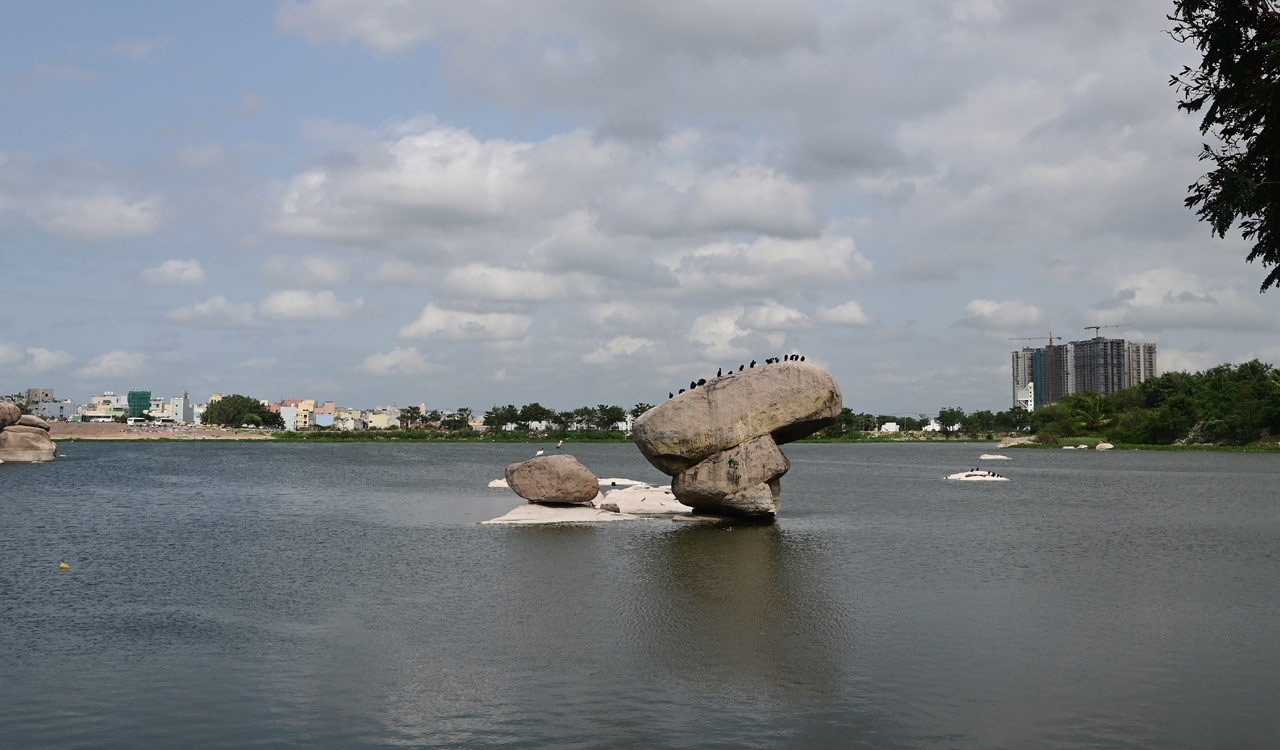
Recent robust monsoon downpours have dramatically elevated water levels across Hyderabad's vital lake system, including Fox Sagar, Saroornagar, and Ameenpur, promising a significant boost to the region's urban water security and groundwater reserves.
For centuries, Hyderabad's intricate network of tanks and lakes, initially conceived by rulers like the Qutb Shahis for irrigation and drinking water, served as the lifeblood of the Deccan plateau's capital. However, rapid urbanization and environmental degradation in recent decades posed significant threats to these historic water bodies. The current phenomenon of surging water levels is not merely a seasonal occurrence but signals the potential success of long-term conservation efforts, including the ambitious Mission Kakatiya, initiated by the previous state administration. This comprehensive program aimed at restoring and rejuvenating thousands of minor irrigation tanks across Telangana, emphasizing desilting, strengthening bunds, and improving feeder channels, which now appears to be yielding tangible results in improved hydrological connectivity and recharge.
Hydrologists view this substantial groundwater recharge as a critical step towards enhancing Hyderabad's climate resilience. Dr. Priya Sharma, a leading expert in urban water management at the National Institute of Hydrology, notes, "Consistent and widespread lake replenishment significantly recharges underlying aquifers, which are vital buffers against drought conditions and reduce the city's over-reliance on distant reservoir sources like those on the Krishna or Godavari rivers. This natural augmentation is far more sustainable than energy-intensive external water transfers." The ecological benefits extend beyond human consumption, supporting local biodiversity and mitigating the urban heat island effect, fostering a healthier microclimate.
Despite the overwhelmingly positive news, authorities remain vigilant. The Hyderabad Metropolitan Water Supply and Sewerage Board (HMWS&SB) is diligently monitoring all water bodies. While fresh inflows into drinking water sources have caused a slight change in water color, officials reassure residents that stringent purification processes are in place to supply 100% safe drinking water. This proactive approach underscores the critical public health dimension of urban water management, ensuring that increased availability does not compromise quality. With the India Meteorological Department (IMD) issuing a yellow alert for heavy rains and thunderstorms over the next five days, and forecasts indicating continued cloudy skies and gusty winds for the city, further gains in water levels are anticipated, solidifying Hyderabad's water security for the foreseeable future.
The current monsoon surge presents an opportune moment for Hyderabad to further cement its position as a city committed to sustainable urban development. Continued investment in maintaining lake health, preventing encroachment, and fostering community stewardship will be paramount to ensure these vital water assets continue to serve future generations, transforming a seasonal blessing into enduring water resilience.