

Chittorgarh's Sanwaliya Seth Temple Achieves Historic Donation Record, Boosting Regional Economy
Over ₹28 crore in cash, nearly 1.5 kg of gold, and a record 204 kg of silver were collected, highlighting the profound economic influence and unwavering devotion sustaining India's sacred institutions.
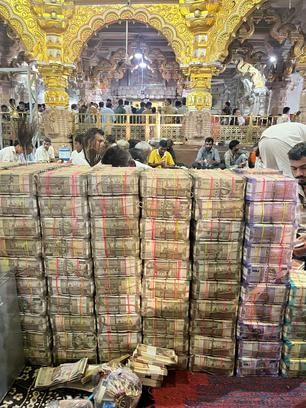
Lord Sanwaliya Seth Temple in Chittorgarh has completed its latest counting of offerings, revealing a remarkable collection of INR 28,32,45,555 in cash, alongside substantial quantities of gold and silver, setting a new precedent for devotional contributions in the region.
The recent Chaturdashi count, meticulously overseen by the Temple Board under President Hazaridas Vaishnav over six phases, confirmed the impressive figures. The primary donation box, or 'bhandar,' yielded a staggering INR 22,22,76,077 in cash, complemented by 410 grams of gold and 80.5 kilograms of silver. Concurrently, the 'bhet kaksh' (offering room) and online contributions accounted for an additional INR 6,09,69,478, alongside 1.033 kilograms of gold and a record 124.4 kilograms of silver. Notably, the total silver collected this July, surpassing 204.5 kilograms, marks an unprecedented volume in the temple's history, underscoring the profound devotion of its followers.
This extraordinary influx of wealth reflects an enduring tradition of religious endowments in India, where temples have historically served as significant economic and social hubs. For centuries, devotees have contributed to sacred sites, a practice rooted in faith, gratitude, and a desire for spiritual merit. These contributions, traditionally managed by temple trusts, often flow back into community welfare, infrastructure development, and the upkeep of these culturally vital institutions. The Sanwaliya Seth Temple, like many prominent pilgrimage centers across Rajasthan and India, plays a pivotal role beyond its spiritual remit, acting as a custodian of cultural heritage and a driver of local economic activity.
The economic impact of such a substantial collection extends significantly into the local economy of Chittorgarh. Large-scale religious tourism generates considerable revenue for ancillary services, including hospitality, transport, and local artisan crafts. The transparent and phased counting process, as observed by temple member Pawan Tiwari, reinforces public trust, which is crucial for sustaining such high levels of philanthropic engagement. Experts in regional economics often highlight how temple towns, buoyed by consistent pilgrimage, maintain stable economic ecosystems even amidst broader fluctuations, channeling funds into local employment and small businesses. The responsible management and deployment of these funds are vital for maximizing their socio-economic benefits.
Looking ahead, the sustained devotion demonstrated through these offerings could facilitate further modernization of temple infrastructure, enhance community outreach programs, and even bolster digital donation initiatives, reflecting evolving trends in religious philanthropy. As India continues to embrace digital transformation, the blend of traditional offering methods with contemporary online platforms ensures accessibility for a broader base of devotees. This robust financial health allows the temple to maintain its sanctity while also contributing to the region's prosperity and addressing community needs, solidifying its role as a spiritual beacon and an economic anchor for Chittorgarh.
The remarkable accumulation of wealth at the Sanwaliya Seth Temple serves as a testament to the unwavering faith of millions and the enduring cultural significance of India's sacred institutions, reinforcing their multifaceted role in the nation's spiritual, social, and economic fabric.