

Ministry Seeks Explanation from JNU VC Santishree Dhulipudi Pandit Over Key Policy Meet Absence
The Union Education Ministry has formally sought an explanation from Santishree Dhulipudi Pandit, the Vice-Chancellor of Jawaharlal Nehru University, regarding her unapproved absence from a critical national conference focused on assessing the half-decade implementation of the National Education Policy 2020.
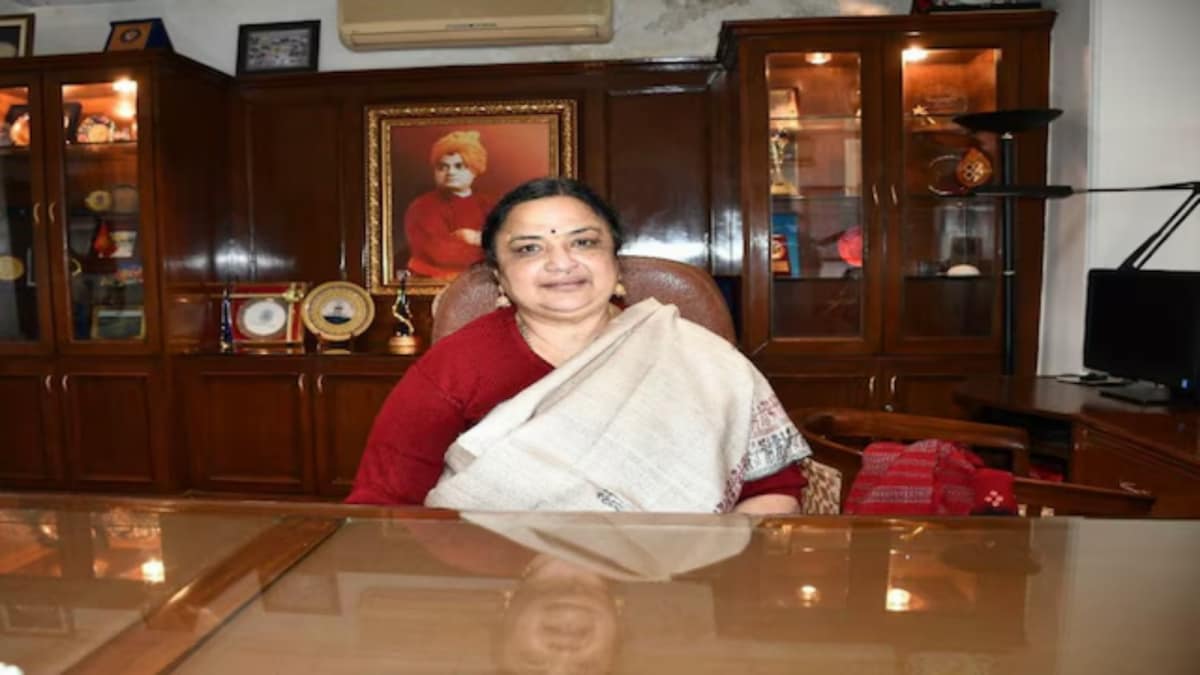
The Union Education Ministry has formally sought a written explanation from Jawaharlal Nehru University (JNU) Vice-Chancellor Santishree Dhulipudi Pandit regarding her unapproved absence from a crucial conference of Central University heads held in Gujarat earlier this month.
The high-level two-day summit, convened on July 10 and 11, was designed to critically evaluate the progress and challenges associated with the National Education Policy (NEP) 2020, marking its half-decade implementation milestone. Such gatherings are pivotal for ensuring a unified approach to national educational reforms and fostering institutional innovation across the country's esteemed central universities. The NEP, launched with ambitious goals to transform India’s education system, relies heavily on the active participation and strategic input of university leadership for its successful ground-level execution. The Ministry's emphasis on policy alignment and operational effectiveness necessitates the presence of key academic administrators to deliberate on best practices and address implementation hurdles collectively.
Historically, significant national educational reforms, from the Kothari Commission's recommendations in the 1960s to subsequent policy shifts, have always relied on a collaborative framework between the central government and autonomous academic institutions. Vice-Chancellors, as the chief executive officers of their respective universities, are mandated to uphold governmental directives and actively engage in national policy dialogues. Sources indicate that Ms. Pandit had cited a concurrent, pre-scheduled conference at JNU as the reason for her inability to attend the Gujarat meeting. However, official protocols dictate that VCs obtain explicit prior approval for non-attendance at ministerial-level convenings, particularly those of national strategic importance. This incident underscores the growing focus on accountability and adherence to established administrative norms within India's higher education governance structures.
"In an era where educational policy is undergoing a significant overhaul to meet 21st-century demands, the unified commitment of university leadership is non-negotiable," commented Dr. Alok Kumar, a former Education Secretary and noted policy analyst. "Ministerial conferences serve not just as review forums but as critical platforms for co-creation and problem-solving. Any unapproved absence from such a key gathering sends a ripple through the system, potentially impacting policy cohesion and the perceived seriousness with which national initiatives are embraced." The Ministry's firm stance reflects a broader push to ensure rigorous oversight and seamless integration of central policy directives across the vast landscape of public higher education institutions.
This development could set a precedent for heightened scrutiny over the attendance and engagement of Vice-Chancellors at future high-stakes policy meetings. The Education Ministry’s move signals a reinforced commitment to robust governance and a zero-tolerance approach towards procedural deviations, particularly concerning flagship national initiatives like the NEP 2020. The incident might also prompt a re-evaluation of communication protocols between central academic leadership and the Ministry, aiming for greater clarity and adherence to administrative guidelines to prevent similar occurrences. Ultimately, the outcome of this inquiry will likely influence the dynamics of central oversight on autonomous educational bodies, potentially reinforcing the government's authority in ensuring policy uniformity and accountability nationwide.
The Ministry awaits Ms. Pandit’s detailed written explanation, the findings of which will undoubtedly shape future interactions and underscore the critical importance of collaborative governance in advancing India’s educational agenda.