
Supreme Court to Grapple with Constitutional Challenge to Judicial Removal Process
Justice Varma challenges internal inquiry's constitutional validity, raising critical questions about judicial accountability and the delicate balance of power between the judiciary and parliament amidst an ongoing impeachment motion.
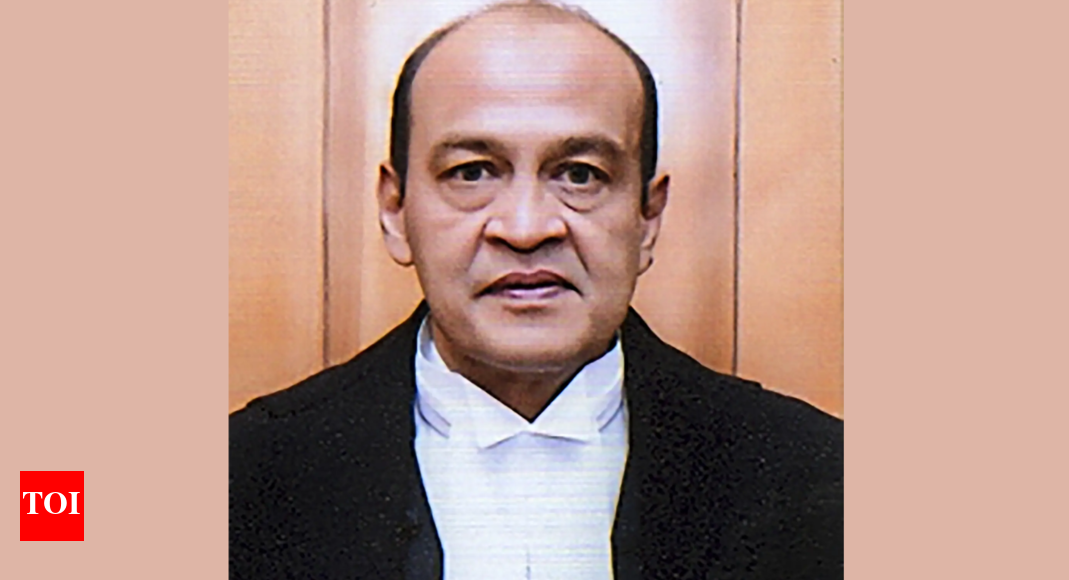
Justice Yashwant Varma has initiated a rare anonymous petition before the Supreme Court of India, seeking to nullify the in-house inquiry report and the former Chief Justice of India's recommendation for his removal from office, citing profound constitutional challenges.
The petition, filed under the identifier "XXX" to maintain anonymity, directly contests the validity of the internal inquiry mechanism, which culminated in a recommendation for his ouster following allegations of a significant sum of cash discovered at his residential premises in Delhi after a fire incident. This unprecedented move by a sitting judge against an internal judicial process underscores a critical juncture in India's judicial oversight framework. While the Judges (Inquiry) Act, 1968, sets out the formal parliamentary process for the removal of a judge, the 'in-house' procedure has historically operated as an internal administrative mechanism, its legal and constitutional standing now subject to intense scrutiny.
The Supreme Court's decision to constitute a bench to hear Justice Varma's plea, with Chief Justice B.R. Gavai recusing himself to ensure impartiality, signals the gravity of the constitutional questions at stake. Concurrently, over 100 Members of Parliament have already signed a motion for Justice Varma's impeachment, with the Lok Sabha Speaker poised to request the Chief Justice of India to form an inquiry committee under the statutory provisions. This dual-track approach—an internal judicial challenge running parallel to a formal parliamentary impeachment process—highlights the intricate and often ambiguous layers governing judicial accountability in the world's largest democracy. Constitutional scholars have long debated the interplay between internal administrative reviews and the explicit parliamentary powers laid out for judicial removal, emphasizing the need for clarity to preserve both judicial independence and public trust.
The outcome of this case holds significant implications for the future of judicial accountability and the delicate balance of power enshrined in the Indian Constitution. Should the Supreme Court find merit in Justice Varma's arguments, it could redefine the boundaries of internal judicial oversight, potentially necessitating legislative reforms to the Judges (Inquiry) Act, 1968, to ensure a more transparent and constitutionally robust process. Conversely, upholding the in-house procedure would solidify its role as a preliminary, yet potent, mechanism in addressing judicial misconduct. Legal experts anticipate this case will serve as a foundational precedent, shaping how future allegations of judicial impropriety are handled and ensuring that the mechanisms of oversight remain consistent with democratic principles and the imperative of an independent judiciary.
As the Supreme Court prepares to hear Justice Varma’s petition alongside another plea seeking a First Information Report (FIR) against him, the unfolding legal drama is set to cast a long shadow, prompting a vital re-evaluation of the procedural integrity safeguarding India’s esteemed judicial system.