

Myanmar's Civil Strife Intensifies: Airstrikes Target Civilians Amidst Resource War
The intensifying conflict, marked by targeted civilian areas and a breach of a China-brokered truce, highlights the junta's desperation against the Brotherhood Alliance's gains and signals a deepening humanitarian crisis.
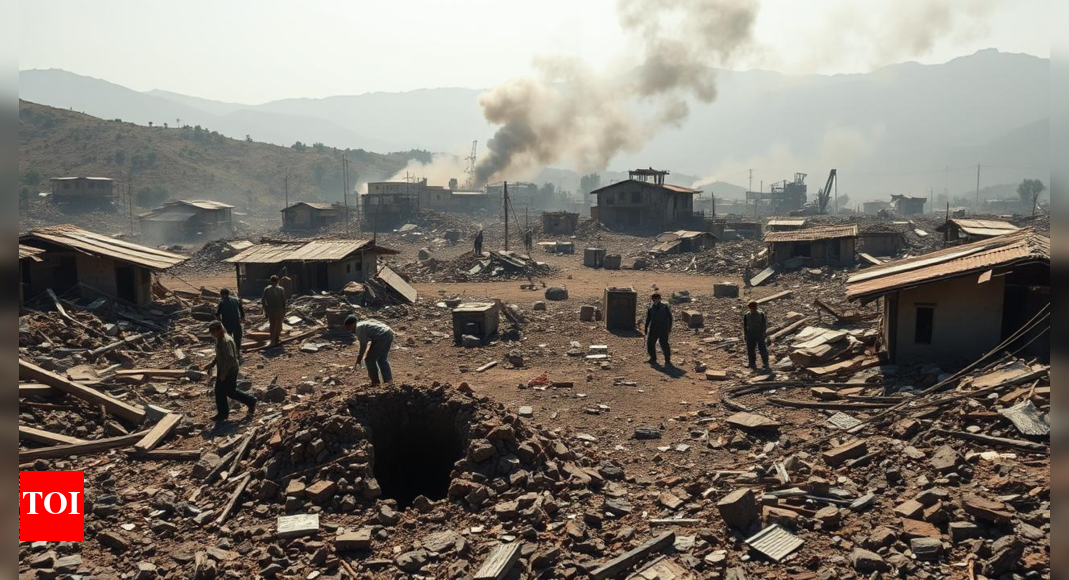
Recent military airstrikes by Myanmar's junta have inflicted a devastating toll on civilian populations and critical infrastructure, signaling a grim escalation in the nation's post-coup conflict and challenging the fragile prospects for peace.
The ongoing civil war, ignited by the 2021 coup, has seen intensified fighting, particularly in resource-rich regions. In a recent assault, the ruby mining center of Mogok, a rebel-held territory, was subjected to a military airstrike that tragically claimed 13 lives, including a monk and other civilians, with 14 more injured. This act underscores the junta's aggressive tactics to regain control over strategically vital areas from the Ta'ang National Liberation Army (TNLA), which has controlled Mogok since mid-2024.
Further exacerbating the humanitarian crisis, the Myanmar National Democratic Alliance Army (MNDAA) has accused the junta of breaching a China-brokered truce with airstrikes on Kutkai town in northern Shan State. This attack resulted in the deaths of seven civilians, including a child, and injured seven others. The MNDAA contends that these actions directly contravene an April agreement, jeopardizing any semblance of stability and threatening to reignite full-scale conflict in the region.
The indiscriminate use of air power extends beyond specific towns; five airstrikes have been reported across northern Mandalay Region and northern Shan State, killing 37 people. In a particularly egregious incident, a resistance-controlled police station in Letpanhla village was bombed, killing 24 people, including detainees and a woman, and wounding more than 30 others. Such actions indicate a disturbing pattern of targeting non-combatants and captured individuals, raising serious concerns about adherence to international human rights laws.
These military operations appear to be a desperate response by the junta as it struggles to maintain control against significant gains by the opposition. The Brotherhood Alliance, comprising the MNDAA, TNLA, and other allied groups, launched Operation 1027 on October 27, 2023, achieving notable successes in northern Shan State and elsewhere. The military's subsequent reliance on conscription, enacted on February 10, 2024, and aerial bombardment, especially after peace talks failed in April, highlights their intent to reassert authority through overwhelming force rather than negotiation, leaving the opposition profoundly skeptical of any future dialogue.
The international community, including the United Nations and the Chinese government, has been urged by groups like the TNLA to intervene and halt what they describe as junta war crimes. The current trajectory points towards an entrenched conflict with severe humanitarian consequences and potential for wider regional destabilization. Without robust, coordinated international pressure and sustained diplomatic efforts, the cycle of violence is poised to continue, further eroding Myanmar's social fabric and undermining any prospect of a peaceful, democratic transition.
The escalating conflict in Myanmar, marked by the junta's increased reliance on aerial bombardment and targeting of civilian infrastructure, demands urgent international attention to prevent further loss of life and a deeper humanitarian catastrophe. The strategic battle for resource-rich areas and the breakdown of peace efforts signal a protracted struggle with profound implications for regional stability and global human rights.