

Gijón Airshow Near-Miss Highlights Advanced Avian Hazard Protocols in Modern Air Displays
The incident underscored the critical role of advanced pilot training and rigorous safety protocols, demonstrating how air forces navigate unpredictable environmental challenges during public demonstrations.
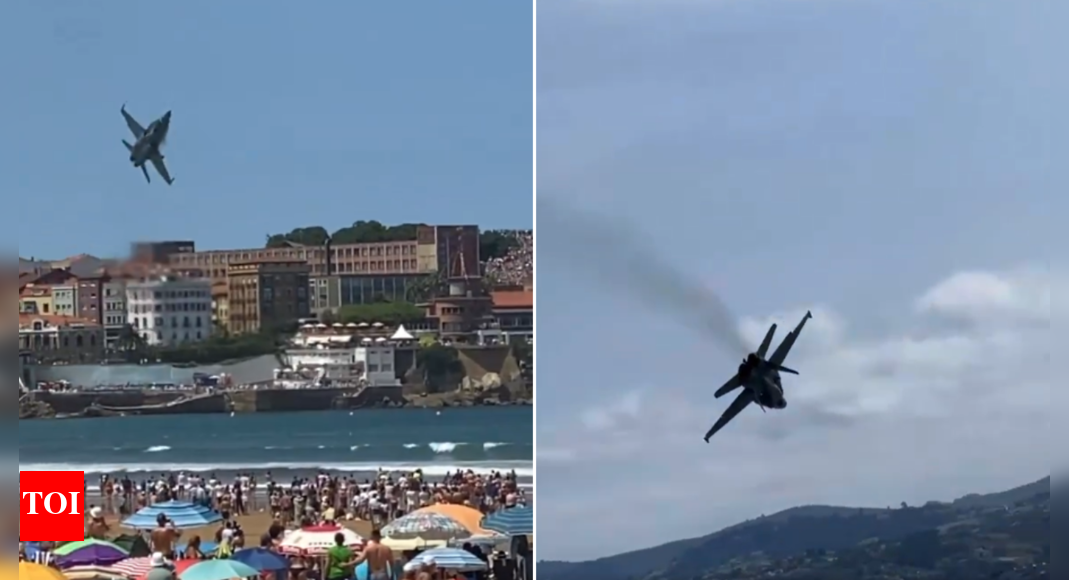
A Spanish Air Force EF-18 Hornet executed a critical evasive maneuver during the 2025 Festival Aéreo Internacional de Gijón on July 28, averting a potential disaster as it encountered a significant bird strike risk amidst a crowd of over 300,000 spectators.
The swift action by the pilot, who expertly guided the high-performance jet away from a perceived mid-air collision with a flock of birds, saw the aircraft dip alarmingly close to the audience before an inverted turn propelled it safely towards the Cantabrian Sea. This incident, while visually dramatic, was later affirmed by the Spanish Air and Space Force as a textbook execution of established safety protocols designed to protect both aircrew and the public from unforeseen environmental hazards during precision flight demonstrations.
Avian hazards, commonly known as Bird Aircraft Strike Hazards (BASH), represent a persistent and complex challenge for global aviation, particularly for military aircraft operating at high speeds and low altitudes during public displays. Historically, bird strikes have caused significant damage to aircraft, from engine ingestion to structural integrity issues, leading to extensive research into mitigation strategies. Since the mid-20th century, air forces worldwide have invested heavily in sophisticated radar systems, acoustic deterrents, and even specialized wildlife management teams at airfields to reduce these risks. The Gijón scenario underscores the inherent unpredictability of the natural environment, even amidst meticulously planned public events.
Dr. Elena Rodríguez, a distinguished aerospace engineer and former test pilot from the European Union Aviation Safety Agency (EASA), commented on the incident's implications. "What unfolded in Gijón was a testament to the rigorous, multi-layered safety training pilots receive," Dr. Rodríguez stated. "Beyond the raw skill, it demonstrates the critical importance of sophisticated avionics and robust flight control systems that allow for such instantaneous, precise reactions under extreme duress. Modern fighters like the EF-18 are designed with high maneuverability envelopes, which are crucial for executing such defensive actions." This near-miss further highlights the ongoing evolution of BASH protocols, moving beyond prevention to encompass rapid-response evasive maneuvers as a last line of defense.
Looking ahead, the incident may accelerate advancements in real-time environmental threat detection for airshows. Innovations in millimeter-wave radar and AI-powered predictive analytics could provide pilots with earlier warnings of avian concentrations, potentially even suggesting optimized flight paths or temporary holds. Discussions within the International Council of Air Shows (ICAS) may intensify regarding dynamic exclusion zones and the integration of drone-based bird dispersal systems. The Spanish Air and Space Force, known for its emphasis on pilot readiness and cutting-edge technology, will undoubtedly integrate lessons from Gijón into future training modules, reinforcing the exemplary professionalism showcased by their pilot on July 28, 2025.
The Gijón incident serves as a stark reminder of the delicate balance between showcasing aerial prowess and ensuring absolute public safety, pushing the boundaries of aviation safety protocols in an increasingly complex operational landscape.